The La Brea Tar Pits are one of the few places on Earth where you can see Ice Age fossils being dug up in the middle of a big city. Natural asphalt has been bubbling up through the ground on Wilshire Boulevard for tens of thousands of years, trapping mammoths, saber-toothed cats, dire wolves and giant sloths. Scientists have pulled millions of fossils out of the pits.
The biggest news for visitors: the La Brea Tar Pits museum closed on July 6, 2026, for a two-year transformation. The park around it stays open, and you can still see the tar pits and the famous mammoth statues. This guide explains what you can visit now, what is changing and where else to see Ice Age fossils in LA.
In this guide
The Tar Pits sit on the Miracle Mile, next to LACMA and near the Petersen Automotive Museum.
La Brea Tar Pits at a glance
- Address: 5801 Wilshire Blvd., Miracle Mile, Los Angeles
- Museum: closed from July 6, 2026, for about two years; reopening expected in 2028
- Park: Hancock Park stays open and free during construction, with some areas fenced off in phases
- Still visible: the Lake Pit with mammoth statues and bubbling asphalt
- Time needed: 30 to 60 minutes for the park
Is the La Brea Tar Pits museum open?
No. The museum building, which opened in 1977, closed to the public on July 6, 2026. The Natural History Museums of Los Angeles County is rebuilding the museum and the surrounding park, with the full campus expected to reopen in 2028, ahead of the Los Angeles Olympic and Paralympic Games.
What stays open during the project:
- Hancock Park: the 13-acre park around the museum stays open, though paths and outdoor features will close and reopen in phases as construction moves around the site.
- Excavation: scientists keep working at the pits, and some digging remains visible to the public.
- Tours and school programs: some behind-the-scenes tours continue; check the museum’s website for dates.
What you can still see
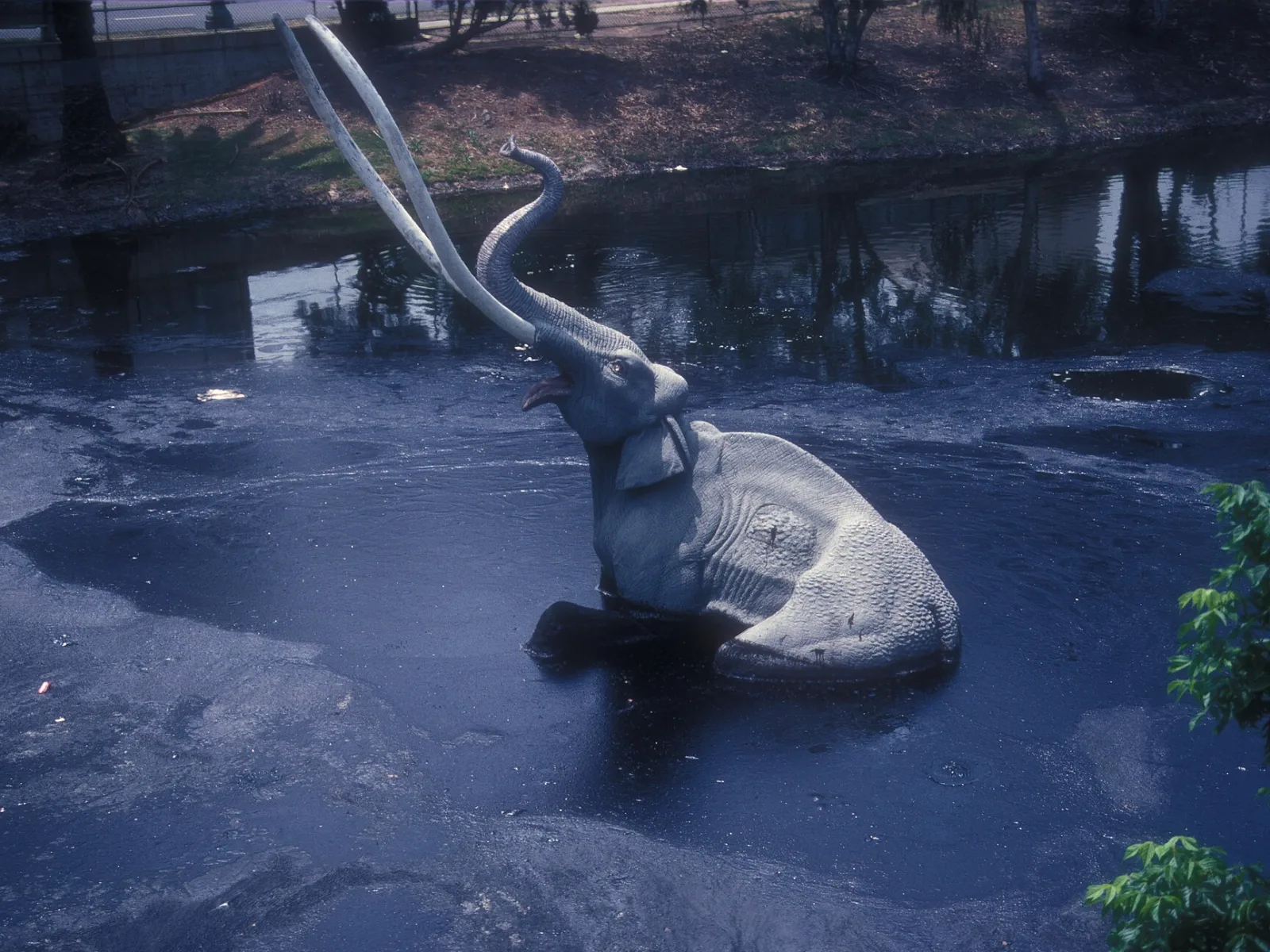
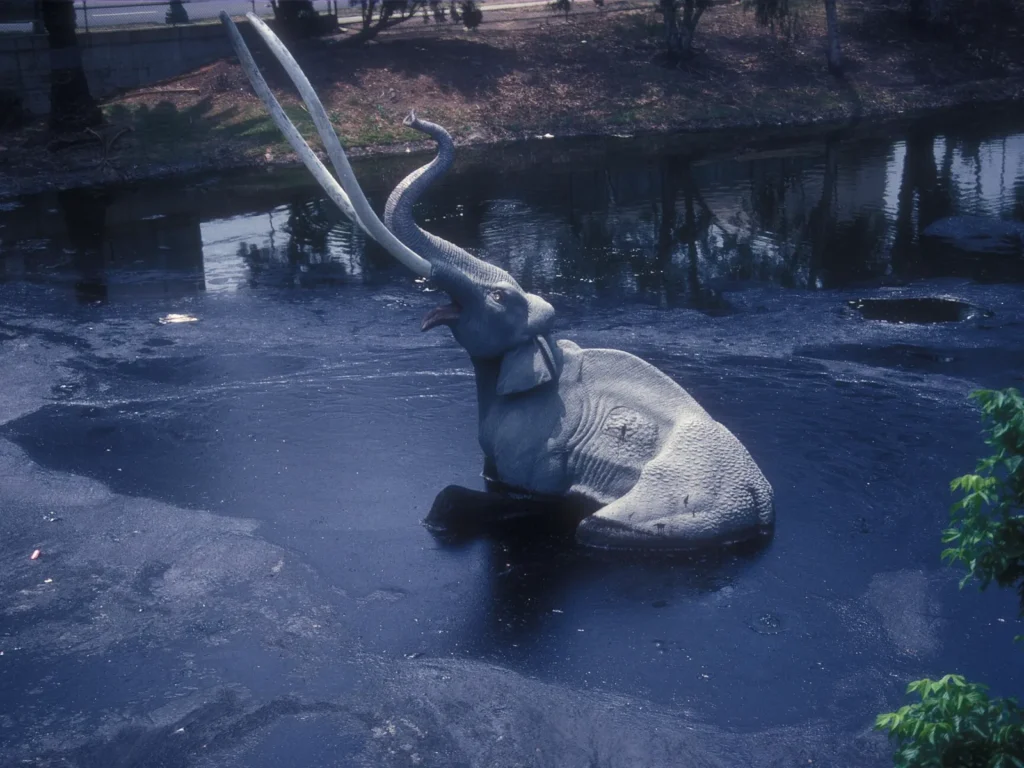
The most famous view at La Brea is free and right on Wilshire Boulevard. The Lake Pit, a large pond of water over asphalt, has life-size statues of a mammoth family, with one adult mammoth stuck in the tar. You will often see bubbles of methane gas rising through the water and smell the asphalt on warm days.
Around the park you may also spot small pools of asphalt seeping out of the ground, sometimes fenced off with signs. These seeps are why the site exists: animals stepped into sticky asphalt hidden under leaves and water and could not escape.
What is changing in the renovation
The project, designed by the architecture firm WEISS/MANFREDI, will reshape both the museum and Hancock Park. Plans include:
- Visible research labs and a modern fossil lab where you can watch scientists clean and study specimens
- New displays and collection storage
- An immersive theater and a roof terrace looking over the park
- A new one-kilometer walking loop through Hancock Park
- Gardens of native Ice Age plants and outdoor classrooms
- A new center for Ice Age research
When it reopens, it will be one of the most modern natural history attractions in the country.
A short history of the Tar Pits
People have known about the asphalt seeps for a very long time. The Tongva and Chumash peoples used the tar to waterproof baskets and canoes, and Spanish explorers recorded the “bitumen” springs in 1769. The area later became the Rancho La Brea, and “la brea” simply means “the tar” in Spanish.
Scientists began serious excavation in the early 1900s and found an incredible concentration of fossils. The most common large animal is the dire wolf, and thousands of saber-toothed cat bones have been found. The pits have also produced tiny fossils of insects, seeds and plants that help researchers understand what Los Angeles looked like during the last Ice Age.
Where to see Ice Age fossils while the museum is closed
- Natural History Museum of Los Angeles County: the sister museum in Exposition Park runs Tar Pits-inspired programs and has big dinosaur and fossil halls.
- La Brea Tar Pits Mobile Museum: a traveling exhibit that visits schools and public events around LA County.
- Hancock Park itself: the Lake Pit and seeps remain the best free look at how the site works.
Getting there and parking
The Tar Pits are on Wilshire Boulevard at Curson Avenue in the Miracle Mile district.
- Metro: the D Line extension opened in May 2026, and Wilshire/Fairfax station is about a five-minute walk west of the Tar Pits. See our LA Metro guide.
- Parking: the paid museum lot on Curson Avenue may be limited during construction. LACMA’s garages on 6th Street and street meters are alternatives.
Nearby things to do
Hancock Park is surrounded by great stops:
- LACMA: the city’s biggest art museum and the Urban Light lampposts are next door.
- Academy Museum of Motion Pictures: the film museum is on the same block.
- Petersen Automotive Museum: across Fairfax Avenue.
- The Original Farmers Market and The Grove: about a 15-minute walk north.
Frequently asked questions
Is the La Brea Tar Pits closed?
The museum building closed on July 6, 2026, for about two years. Hancock Park and the outdoor Lake Pit remain open and free, with some areas closed during construction.
When will the La Brea Tar Pits reopen?
The full campus, including the museum, is expected to reopen in 2028.
Can you still see the mammoths at La Brea Tar Pits?
Yes. The mammoth statues at the Lake Pit on Wilshire Boulevard can be seen from the park and the sidewalk.
Is the tar at La Brea real?
Yes. It is natural asphalt that seeps up from underground oil deposits. It still bubbles today, especially in warm weather.
What animals were found at the La Brea Tar Pits?
Dire wolves, saber-toothed cats, mammoths, mastodons, giant ground sloths, ancient bison and camels, plus thousands of birds, insects and plants.
Photo credits
Featured image: JERRYE AND ROY KLOTZ MD / Wikimedia Commons, CC BY-SA 3.0.