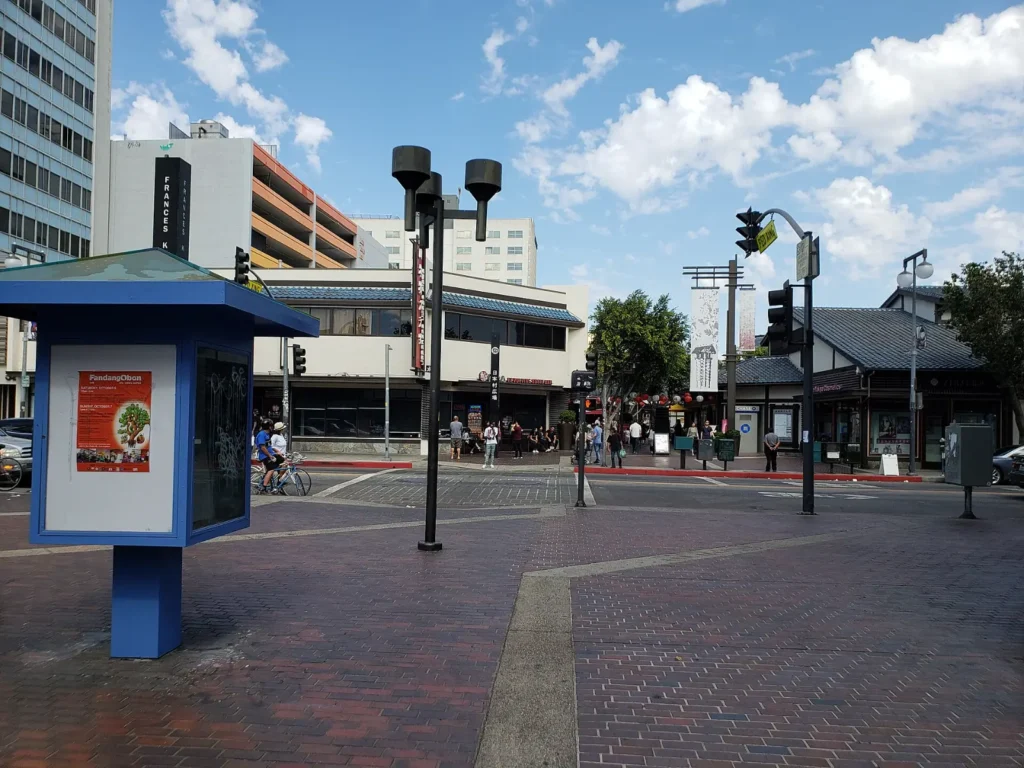
Little Tokyo is one of only three official Japantowns left in the United States, and it has been the heart of Japanese American life in Los Angeles since the early 1900s. In a few walkable blocks east of City Hall you will find ramen shops, mochi makers, sushi bars, temples, a lantern-lined shopping plaza and some of the most important history in the city.
This guide covers the neighborhood’s history, what to see, where to eat, the big annual festivals and how to get there.
In this guide
Little Tokyo is next to the Arts District and a short walk from City Hall; see our downtown Los Angeles guide for more nearby.
Little Tokyo at a glance
- Where: around 1st and 2nd Streets between Alameda Street and Los Angeles Street, downtown LA
- Best for: Japanese food, sweets, shopping and history
- Big festival: Nisei Week, every August
- Museum update: the Japanese American National Museum is closed for renovation and plans to reopen in January 2027
- Metro: Little Tokyo/Arts District station (A and E Lines)
- Time needed: 2 to 4 hours
A short history
Japanese immigrants began settling around First Street in the 1880s and 1890s, and by the 1930s Little Tokyo was home to tens of thousands of Japanese Americans. In 1942, after Executive Order 9066, the community was forced into incarceration camps, and the neighborhood was emptied. Many families returned after the war to rebuild.
The historic blocks of First Street are now a National Historic Landmark district, and community groups have fought for decades to keep Little Tokyo a living neighborhood rather than just a tourist stop.
What to see
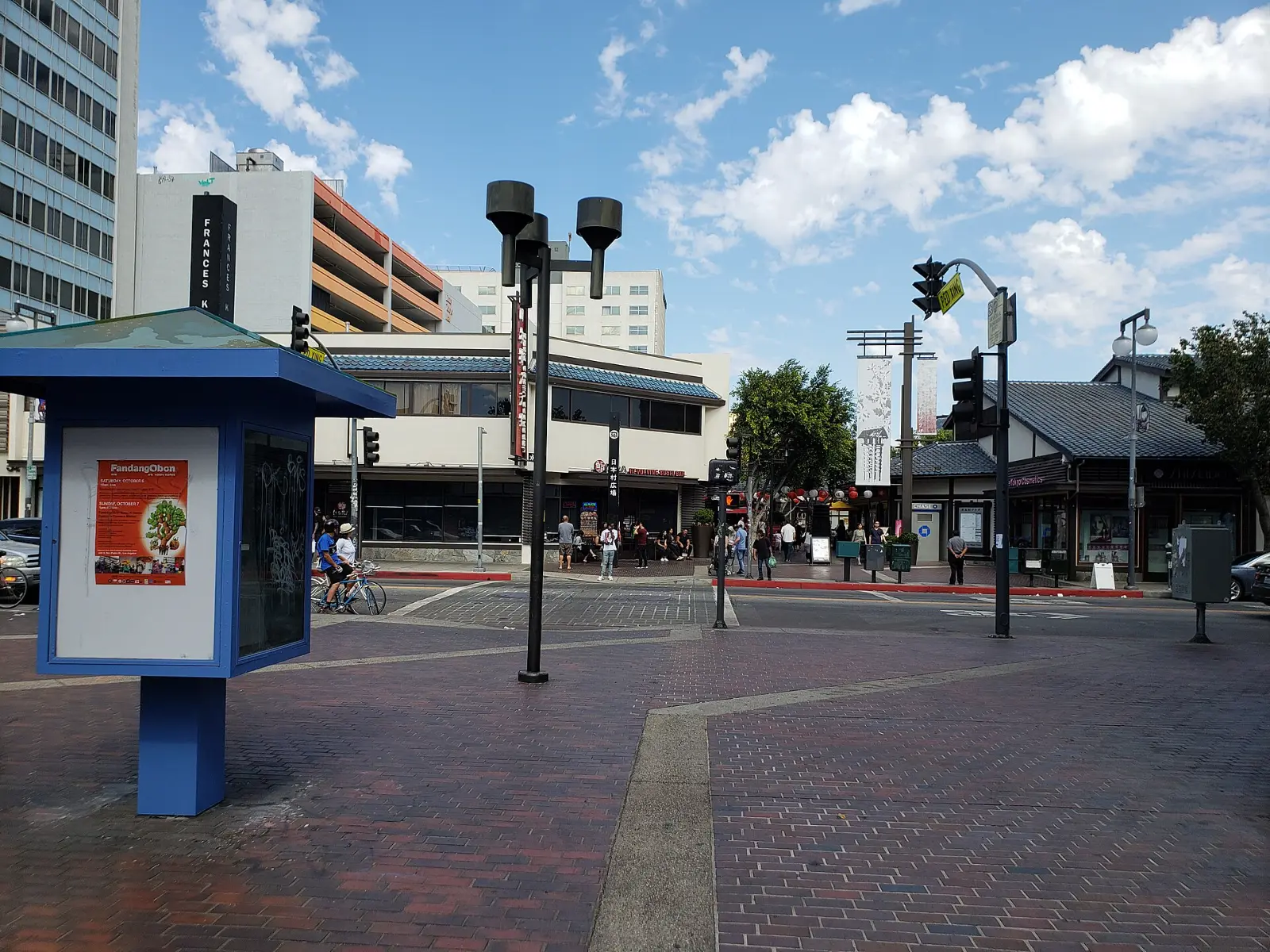
- Japanese Village Plaza: a pedestrian street with a fire lookout tower, paper lanterns, gift shops, snack stands and restaurants. It is the busiest spot in the neighborhood.
- First Street Historic District: a row of early-1900s storefronts, some still run by the same families.
- Go For Broke Monument: a memorial honoring Japanese American soldiers who served in World War II, behind the museum.
- Japanese American National Museum (JANM): the country’s leading museum of Japanese American history. It is closed for renovation and plans to reopen in January 2027; check its website before visiting.
- Japanese American Cultural and Community Center: home to the Aratani Theatre and the James Irvine Japanese Garden, a quiet stream garden.
- Higashi Honganji and Koyasan Buddhist temples: historic temples that welcome respectful visitors.
- MOCA Geffen Contemporary: a big warehouse gallery of the Museum of Contemporary Art on Central Avenue.
Where to eat and snack
Little Tokyo is a food destination. Some favorites:
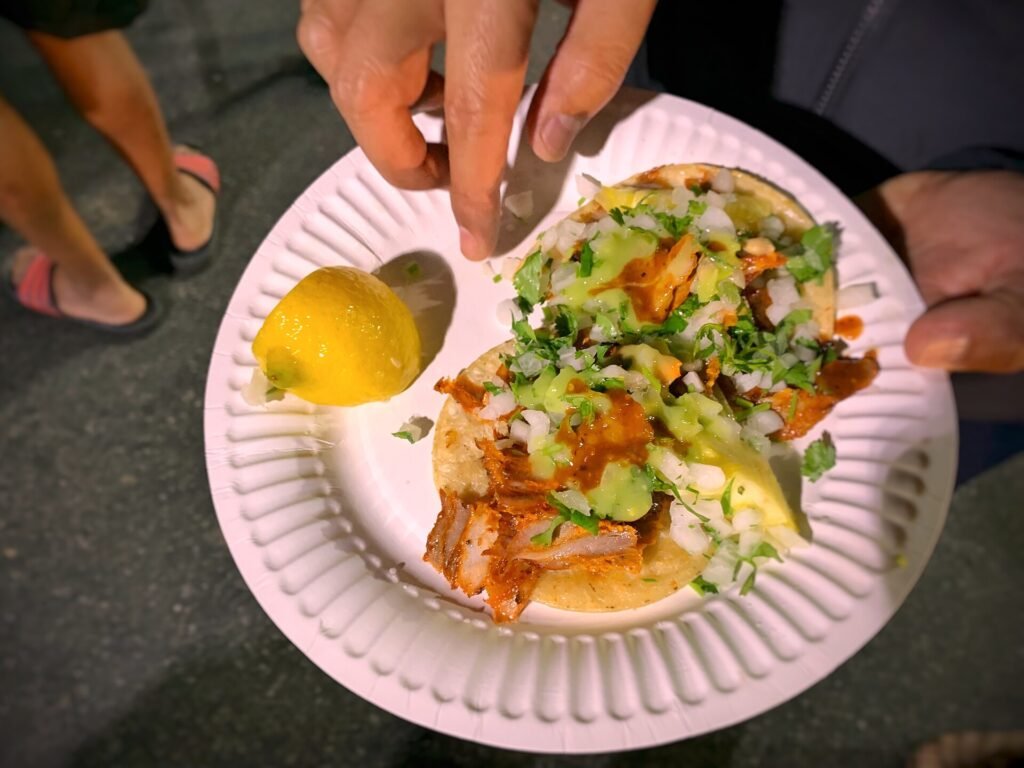
- Ramen: Daikokuya on First Street is a longtime favorite for rich tonkotsu ramen, and the neighborhood has many other ramen shops.
- Sushi and izakaya: from casual counters to small-plate bars on Second Street and in the plazas.
- Fugetsu-Do: a family-run confectionery making mochi and Japanese sweets since 1903, one of the oldest businesses in the neighborhood.
- Curry, udon and katsu: casual spots across the main blocks.
- Desserts: soft-serve, taiyaki, shaved ice and boba around Japanese Village Plaza.
- Groceries: Japanese supermarkets nearby sell snacks, bento and sake.
Lines form at popular ramen shops at dinner; arrive early or put your name down and wander.
Festivals and events
- Nisei Week Japanese Festival: every August, with a parade, taiko drums, ondo street dancing, a car show and food. It has run since 1934.
- Tanabata: colorful paper streamers decorate the neighborhood during Nisei Week.
- New Year’s celebrations: mochi pounding and traditional events in early January.
- Haunted Little Tokyo: ghost tours and a Halloween block party in late October. See our Halloween in Los Angeles guide.
Getting there and parking
- Metro: take the A or E Line to Little Tokyo/Arts District station on Alameda Street, at the edge of the neighborhood. The Regional Connector made it a one-seat ride from Long Beach, Pasadena and Santa Monica. See our LA Metro guide.
- Parking: paid lots and garages around Japanese Village Plaza and Second Street, many with validation from restaurants. Street meters are limited.
Nearby things to do
- Arts District: street art, breweries and restaurants just east. See our Arts District guide.
- City Hall: the free observation deck has great views, a short walk west.
- Olvera Street: about 15 minutes’ walk north. See our Olvera Street guide.
- The Broad and Grand Central Market: a quick ride on the Metro or a 20-minute walk.
Tips for visiting
- Come hungry and graze.
- Visit in the evening when lanterns glow over Japanese Village Plaza.
- Bring cash for small shops and sweet stands.
- Learn the history at the Go For Broke Monument and, when it reopens, JANM.
Frequently asked questions
Is the Japanese American National Museum open?
The museum is closed for renovation and plans to reopen in January 2027. Check its website for updates.
How do you get to Little Tokyo by Metro?
Take the A or E Line to Little Tokyo/Arts District station.
What is Little Tokyo known for?
Japanese food and sweets, Japanese Village Plaza, Japanese American history and the Nisei Week festival.
When is Nisei Week?
Nisei Week takes place every August in Little Tokyo.
Is Little Tokyo walkable?
Yes. The main sights are within a few blocks of First and Second Streets.
Photo credits
Featured image: RightCowLeftCoast / Wikimedia Commons, CC BY-SA 4.0.