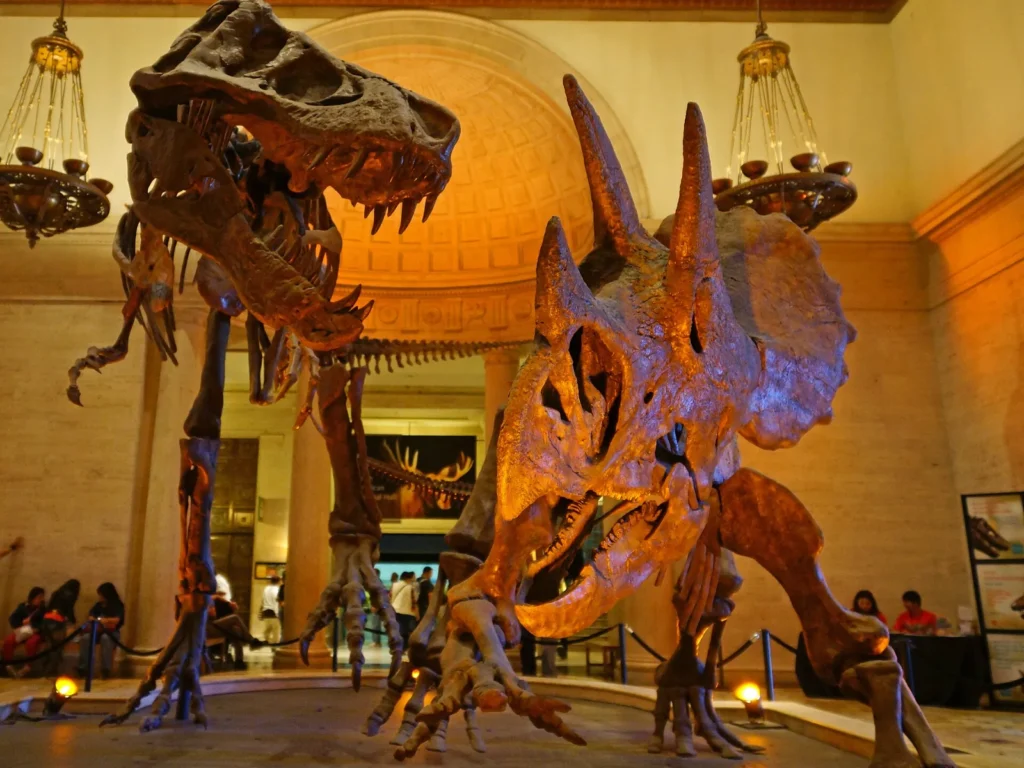
The Natural History Museum of Los Angeles County, usually called NHM, is the biggest natural history museum in the western United States and one of the best family days out in LA. Its Dinosaur Hall is world class, with a rare growth series of three T. rex skeletons, and the rest of the museum covers gems, mammals, ancient cultures, LA history and the wildlife living in your own backyard.
The museum sits in Exposition Park, next to the California Science Center, so you can easily combine the two. This guide covers tickets, free entry, hours, the must-see halls and tips for visiting with kids.
In this guide
NHM is on our list of the best museums in Los Angeles.
Natural History Museum at a glance
- Address: 900 W. Exposition Blvd., Exposition Park, Los Angeles
- Hours: 9:30 a.m. to 5 p.m.
- Closed: first Tuesday of each month, July 4, Thanksgiving, Christmas and New Year’s Day
- Tickets: adults about $18; students about $14; kids about $7
- Free: LA County residents on weekday afternoons; check NHM’s site for current free times
- Nearest Metro: Expo Park/USC station on the E Line
- Time needed: 2 to 4 hours
Tickets and free entry
General admission is about $18 for adults, $14 for students with ID and $7 for children, with discounts for seniors and LA County residents. Buy online to pick your date and skip the line; e-tickets work on your phone.
Free and discounted visits
- LA County residents get free general admission on weekday afternoons (typically 3 to 5 p.m.). Bring ID with a county address.
- Kids under 3 are free.
- Members get free entry to NHM and the La Brea Tar Pits when it reopens.
- The NHM Commons, the museum’s newer public entrance hall, is free to enter.
Seasonal exhibits such as the Butterfly Pavilion may need a separate timed ticket.
Dinosaur Hall
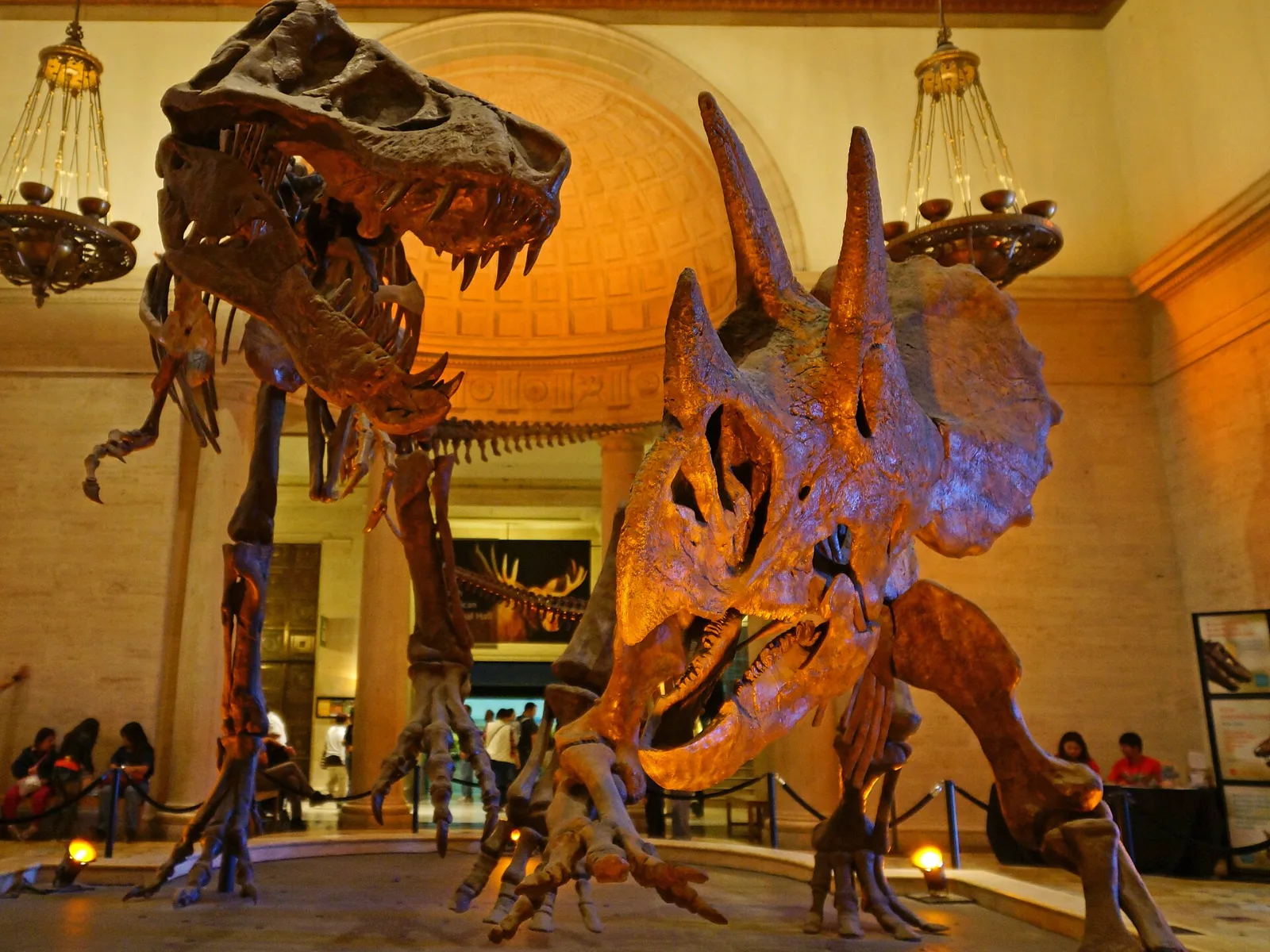
The Dinosaur Hall is the star of the museum. It has more than 300 real fossils and about 20 complete skeletons, arranged in two bright, two-story galleries. Highlights include:
- The T. rex growth series: a baby, juvenile and adult Tyrannosaurus rex, one of the only displays of its kind in the world.
- Triceratops and other giants mounted in action poses.
- Sea monsters, including the long-necked marine reptiles that swam over ancient California.
- The Dino Lab, where you can watch paleontologists preparing fossils behind glass.
Kids also love the Dinosaur Encounters show, in which life-size dinosaur puppets walk through the museum. Check the daily schedule when you arrive.
Other halls to see
- Age of Mammals: 66 million years of mammal evolution, with mastodons, saber-toothed cats and early whales.
- Gem and Mineral Hall: thousands of crystals, a vault of gold and gemstones, and glowing minerals.
- Becoming Los Angeles: the story of LA from Indigenous villages and Spanish missions to Hollywood and freeways.
- Nature Lab: an interactive gallery about the animals living around LA, from coyotes to mountain lions.
- Habitat Halls: classic dioramas of African and North American mammals.
- Ancient Latin America: pre-Columbian art and artifacts.
Nature Gardens and seasonal pavilions
Outside, the 3.5-acre Nature Gardens are included with admission. They have native plants, a pond, a pollinator garden and an edible garden, and they are a good place to let kids run around.
The Butterfly Pavilion opens seasonally, usually from spring into early fall, and the Spider Pavilion often follows in the fall. These outdoor tents are small and timed, so book ahead.
Getting there and parking
- Metro: take the E Line to Expo Park/USC station, about a five-minute walk. See our LA Metro guide.
- Parking: NHM’s paid lot is off Exposition Boulevard at Menlo Avenue. Prices rise on USC game days and stadium events, and the lot can fill, so check Exposition Park’s event calendar before driving.
Plan your day in Exposition Park
- California Science Center: free general admission and Space Shuttle Endeavour, back on view from November 13, 2026.
- Exposition Park Rose Garden: a free sunken garden with thousands of roses.
- California African American Museum: free art and history.
- LA Memorial Coliseum: the historic stadium that has hosted two Olympic Games and will host events in 2028.
Tips for visiting
- Arrive at 9:30 a.m. on weekdays for the calmest visit.
- Start with the Dinosaur Hall before school groups and families arrive.
- Food: there is a cafe on site; outside food is not allowed in the galleries, but you can picnic in the gardens.
- Strollers are welcome, and the museum is accessible.
- Plan 3 to 4 hours with young kids.
Frequently asked questions
How much does the Natural History Museum in LA cost?
Adult tickets are about $18, students about $14 and kids about $7. LA County residents can visit free on weekday afternoons.
Is the Natural History Museum free on certain days?
LA County residents get free entry on weekday afternoons. Check the museum’s website for current free days and times.
Is the Natural History Museum good for kids?
Yes. The Dinosaur Hall, dinosaur puppet shows, Nature Lab and gardens are great for children.
Is the Natural History Museum near the Science Center?
Yes. They are next to each other in Exposition Park.
Does NHM have La Brea Tar Pits fossils?
The La Brea Tar Pits and NHM are part of the same museum family. While the Tar Pits museum is closed for renovation until 2028, NHM runs Ice Age programs. See our La Brea Tar Pits guide.
Photo credits
Featured image: Allie_Caulfield from Germany / Wikimedia Commons, CC BY 2.0.