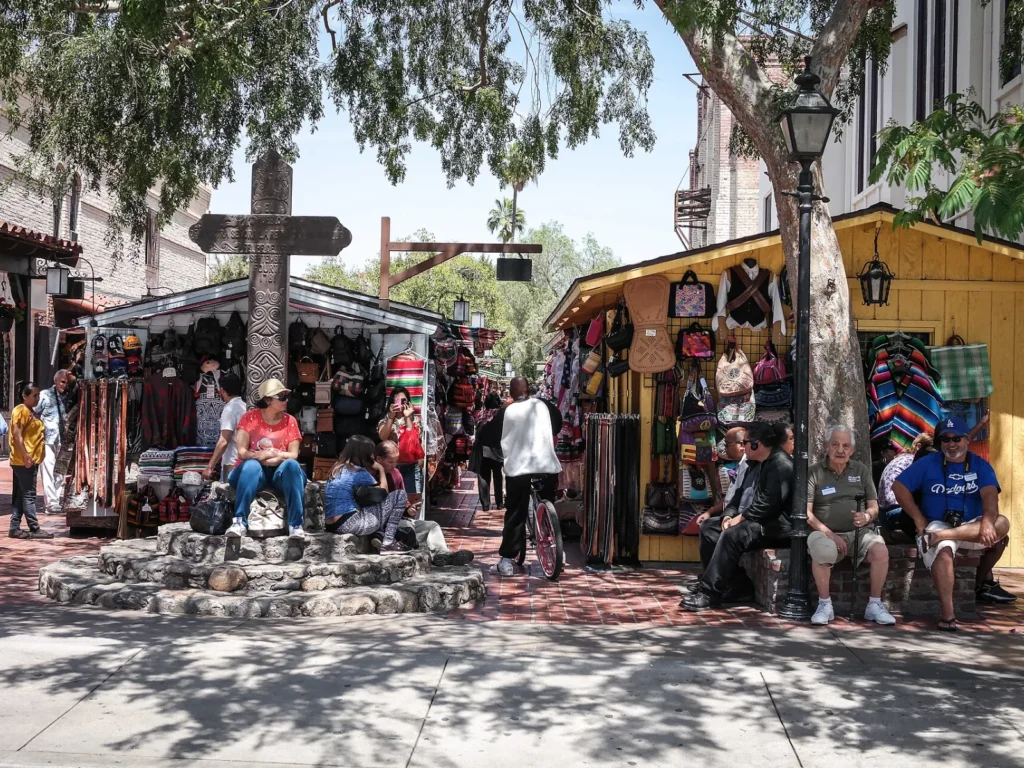
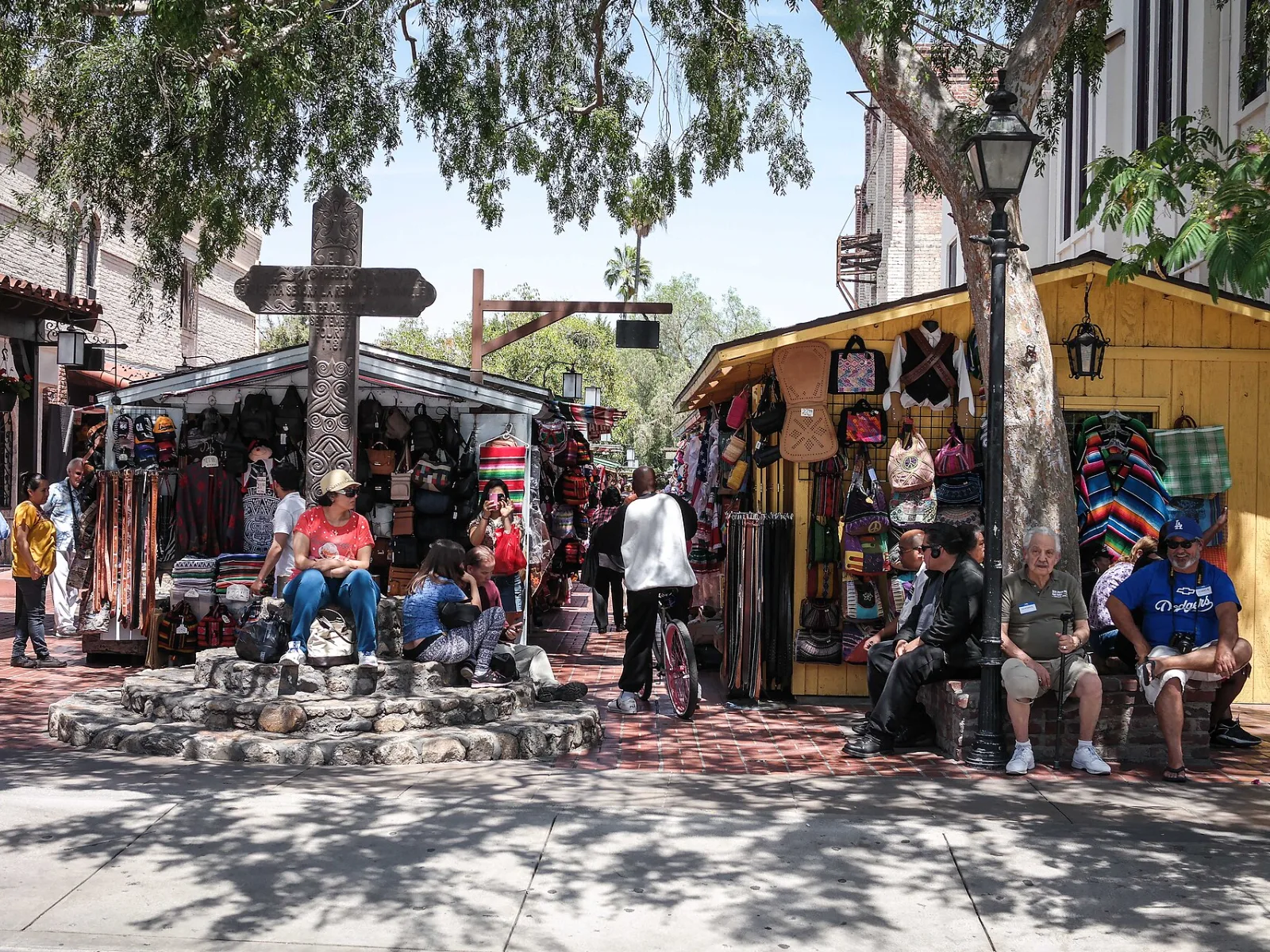
Olvera Street is where Los Angeles began. The brick-paved lane sits inside El Pueblo de Los Ángeles Historical Monument, close to the spot where 44 settlers founded the city in 1781. Today it is a colorful Mexican marketplace lined with stalls selling crafts, candy and souvenirs, with restaurants serving taquitos and mariachi music drifting across the old plaza.
Visiting is free, and it is right next to Union Station, so it is easy to reach by Metro. This guide covers the history, what to see, where to eat, the big annual celebrations and tips for visiting.
In this guide
For the rest of the area, see our downtown Los Angeles guide.
Olvera Street at a glance
- Address: 125 Paseo de la Plaza, downtown Los Angeles
- Admission: free
- Hours: shops and restaurants generally open from about 10 a.m. into the evening; hours vary
- Must-see: Avila Adobe, the oldest house in Los Angeles (free)
- Metro: Union Station (A, B and D Lines), across Alameda Street
- Time needed: 1 to 2 hours
A short history
El Pueblo de la Reina de los Ángeles was founded in 1781 by settlers of Indigenous, African and Spanish heritage, near the Tongva village of Yaanga. The plaza area was the center of the town through the Spanish and Mexican eras.
By the early 1900s the district had fallen into disrepair. In 1930, Christine Sterling led an effort to turn Olvera Street into a Mexican-style marketplace to preserve the old buildings and celebrate the city’s roots, and it has been a busy market ever since. The surrounding blocks became a state historic park and are now a city monument.
What to see
- Avila Adobe: built in 1818 by rancher Francisco Avila, it is the oldest surviving house in Los Angeles. Rooms are furnished as they would have been in the 1840s. Entry is free, and a visit takes about 15 to 20 minutes.
- The Plaza: the shady central square with a bandstand, where festivals, dancers and mariachis perform.
- La Placita Church (Our Lady Queen of Angels): the historic Catholic church across from the plaza, still an active parish.
- América Tropical Interpretive Center: see David Alfaro Siqueiros’s 1932 mural, once whitewashed for its political message and now restored and protected. Free.
- Chinese American Museum: in the historic Garnier Building, with free exhibitions on Chinese American history in LA.
- Sepulveda House and Pico House: historic buildings from the 1880s and 1870s; Pico House was once the city’s grandest hotel.
- Old Plaza Firehouse: LA’s oldest firehouse, with antique equipment.
El Pueblo’s visitor center offers free docent-led walking tours on many days; check the schedule at the Sepulveda House.
Shopping on Olvera Street
The street is lined with puestos (stalls) selling handmade leather goods, embroidered blouses, ponchos, pottery, Day of the Dead decorations, Mexican candy, toys and small guitars. Prices are generally fair, and many stalls are family-run businesses passed down for generations. Bring some cash for small purchases.
Where to eat
- Cielito Lindo: at the north end of the street, famous since the 1930s for crispy taquitos smothered in avocado sauce. The line moves quickly.
- La Golondrina: in the historic Pelanconi House, one of the oldest brick buildings in LA, serving Mexican plates on a patio.
- Snack stands: churros, aguas frescas, fresh fruit with chile and Mexican pastries are sold along the street.
Festivals and events
Olvera Street hosts some of LA’s most beloved traditional celebrations:
| Event | When | What happens |
|---|---|---|
| Blessing of the Animals | Holy Saturday, before Easter | Pets and farm animals blessed by priests in a festive parade |
| Cinco de Mayo | Early May | Music, dance and food on the plaza |
| Mexican Independence Day | Mid-September | Celebrations of El Grito and folkloric performances |
| Día de los Muertos | October 25 to November 2, 2026 | Nightly processions and community altars |
| Las Posadas | December 16 to 24 | Nightly candlelit procession re-enacting Mary and Joseph’s search for shelter, with piñatas |
For more on the fall celebration, see our Día de los Muertos in Los Angeles guide.
Getting there and parking
- Metro: Union Station is directly across Alameda Street. The A, B and D Lines, plus Metrolink and Amtrak, all stop there. See our LA Metro guide.
- Parking: small paid lots around El Pueblo and Union Station; rates vary by day and events.
Nearby things to do
- Union Station: LA’s 1939 train station, worth a look for its Mission Revival hall.
- Chinatown: a short walk north along Broadway and Hill Street. See our Chinatown guide.
- Little Tokyo: about 15 minutes’ walk south.
- LA Plaza de Cultura y Artes: a free museum about Mexican American history next to the plaza.
Tips for visiting
- Weekday mornings are quiet; weekends bring music and crowds.
- Visit during a festival for the most atmosphere.
- Start with the Avila Adobe, then wander the street and finish with taquitos.
Frequently asked questions
Is Olvera Street free to visit?
Yes. Walking the street, the plaza and the Avila Adobe is free.
What is the oldest house in Los Angeles?
The Avila Adobe on Olvera Street, built in 1818.
What food is Olvera Street known for?
Taquitos with avocado sauce from Cielito Lindo, plus churros and Mexican snacks.
When is Las Posadas on Olvera Street?
Las Posadas takes place nightly from December 16 to 24.
How do you get to Olvera Street?
Take Metro to Union Station and cross Alameda Street.
Photo credits
Featured image: Visitor7 / Wikimedia Commons, CC BY-SA 3.0.