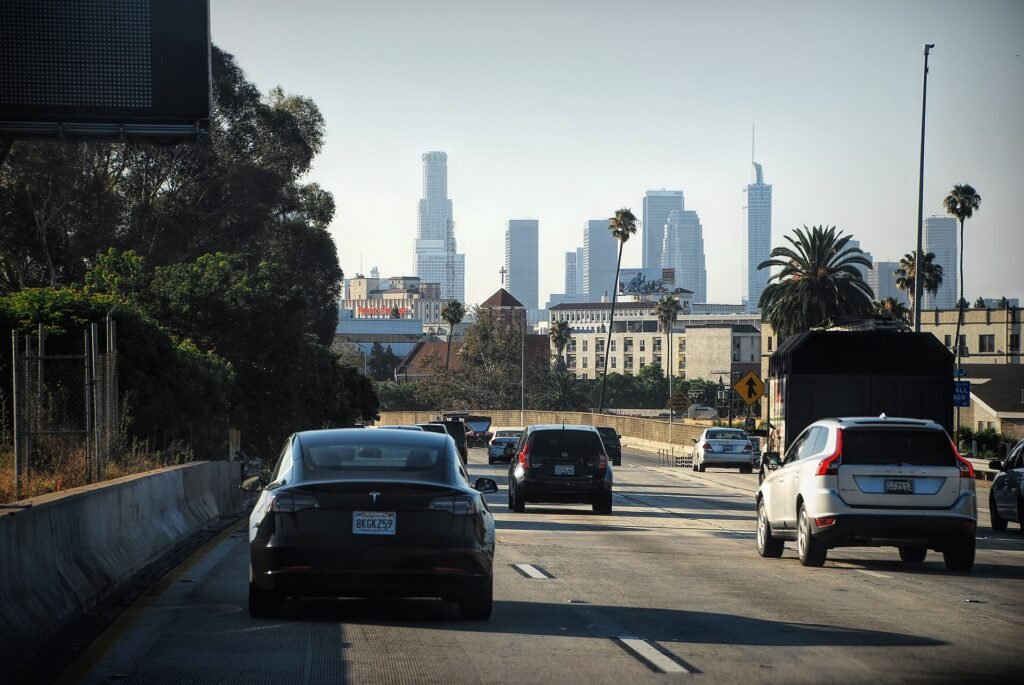

You can visit Los Angeles without a car if you stay near a Metro rail line and plan your days by area. Downtown, Hollywood, Santa Monica, Pasadena, Koreatown and Long Beach all work well on transit, and a regular Metro fare is $1.75 with a $5 daily cap. Fill the gaps with local buses like DASH and Big Blue Bus, bike share and the occasional rideshare, and save day trips that need a car for a one-day rental.
Is LA really doable without a car?
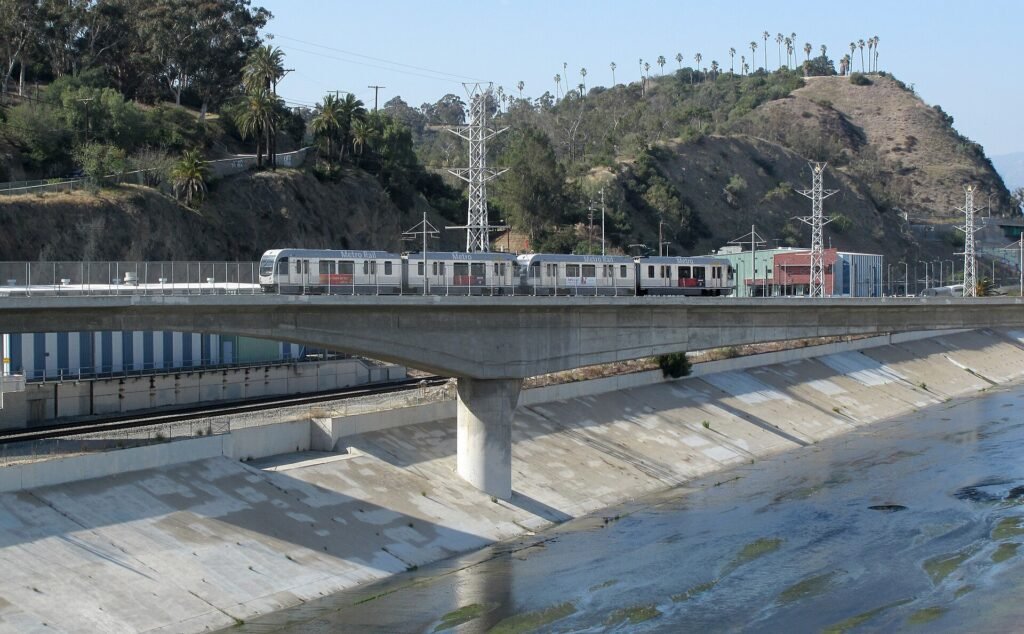
Yes, for many visitors. LA is spread out, but the Metro rail network now links many of the places visitors go most: downtown, Hollywood, Universal City, Santa Monica, Culver City, Pasadena, Long Beach and the Wilshire corridor. The trick is choosing where to stay and grouping sights by area so you are not crossing the region several times a day.
A car still helps for hiking trailheads, Malibu, the South Bay beaches, Griffith Observatory at night and most day trips.
Where to stay
Pick a base within walking distance of a rail station:
- Downtown LA: The hub of the rail system, with lines in every direction and Union Station for Metrolink and Amtrak.
- Hollywood: The B Line stops at Hollywood/Vine and Hollywood/Highland, with a quick ride to Universal City or downtown.
- Santa Monica: The E Line ends at Downtown Santa Monica, near the pier and beach. Our Santa Monica guide covers the area.
- Koreatown: Served by the B and D Lines, with central access.
- Pasadena: The A Line runs through Old Pasadena.
- Long Beach: The A Line ends downtown, near the waterfront and aquarium.
LA Metro basics
Fares and caps
According to LA Metro, a regular fare is $1.75 and includes free transfers for two hours. If you pay with a TAP card or tap the same contactless credit or debit card each time, fares cap at $5 per day and $18 for seven days, so you never pay more than that no matter how much you ride.

Tips:
- Use one TAP card or one contactless card for every trip, so your rides count toward the cap.
- Tap every time you board, including at rail station validators.
- Each person needs their own card or device.
Lines visitors use most
- B Line (Red): Downtown to Hollywood and Universal City/Studio City and North Hollywood.
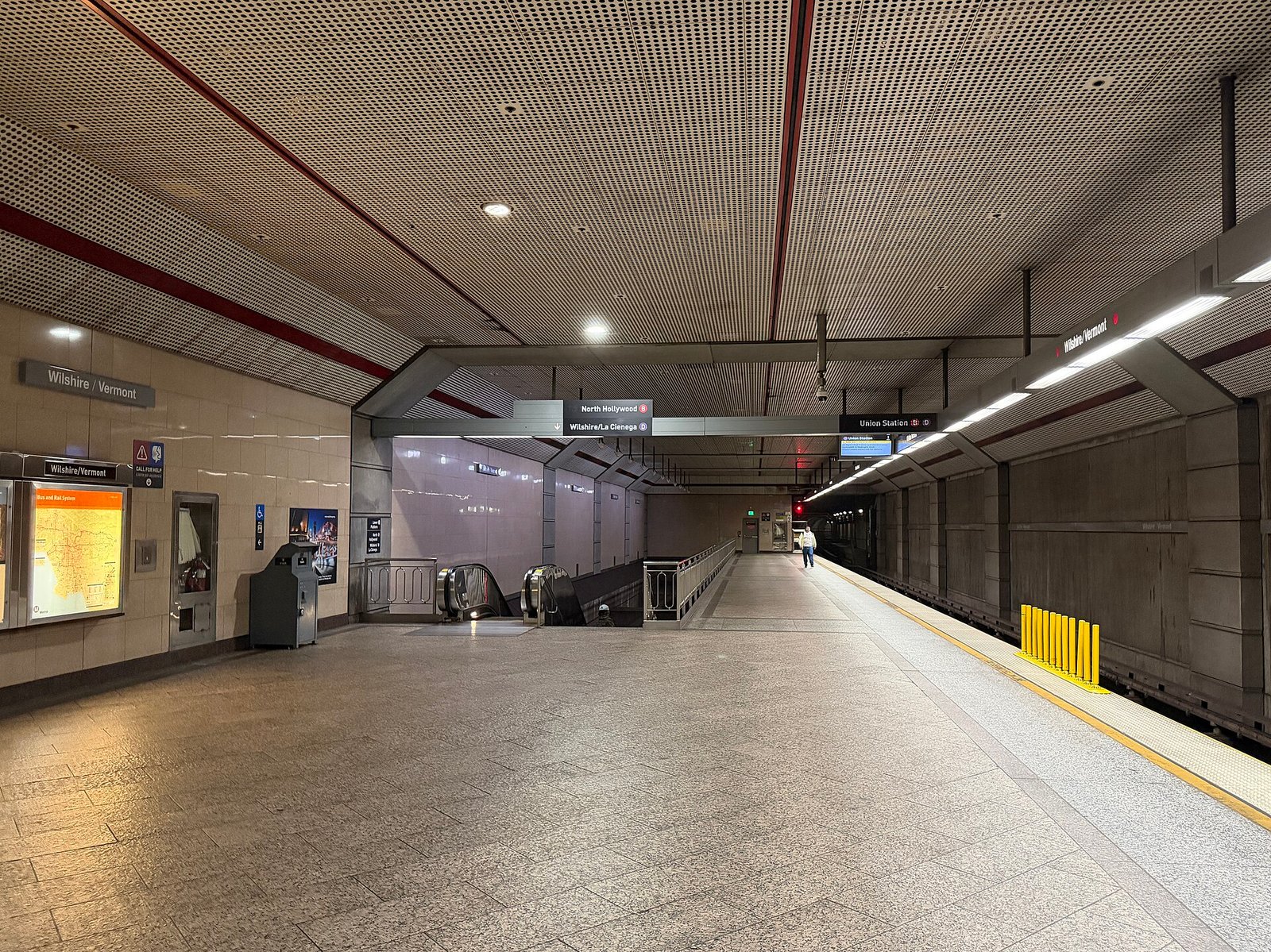
- D Line (Purple): Downtown to Koreatown and along Wilshire Boulevard. The first extension opened on May 8, 2026, adding Wilshire/La Brea, Wilshire/Fairfax and Wilshire/La Cienega stations, according to Metro. Wilshire/Fairfax is a short walk from LACMA and the Academy Museum.
- E Line (Expo): Downtown to Exposition Park, Culver City and Santa Monica.
- A Line (Blue and Gold): Long Beach to downtown, then Pasadena and on to the eastern foothills.
- K Line and C Line: Serve the Crenshaw corridor, Inglewood and the South Bay, with the LAX/Metro Transit Center for airport connections.
Our LA Metro guide goes deeper on maps, stations and safety.
DASH buses
LADOT’s DASH buses run short neighborhood routes in downtown, Hollywood and other parts of the city. LADOT Transit lists the fare at 50 cents cash or 35 cents with a TAP card. DASH is useful for getting around downtown and for reaching Griffith Observatory on the Observatory route.
Big Blue Bus in Santa Monica
Big Blue Bus covers Santa Monica, Venice, UCLA and nearby areas. The fare is $1.50 cash or $1.25 with contactless payment, which includes one free Big Blue Bus transfer within two hours, according to Big Blue Bus. It is handy for trips between Santa Monica and Venice or to Westwood.
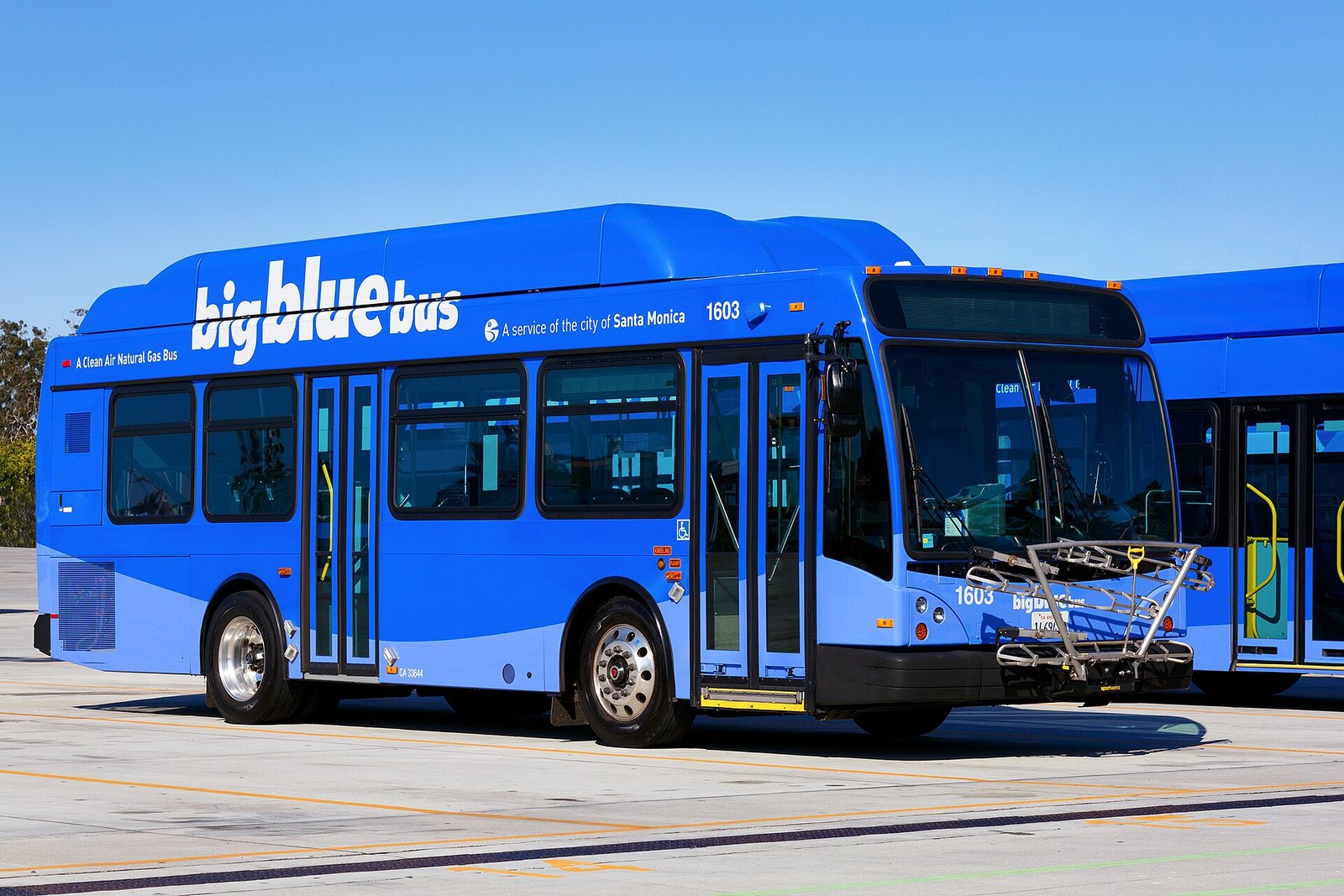
Note that Metro passes are not accepted on Big Blue Bus, though interagency transfers are available with contactless payment.
Bike share and scooters
Metro Bike Share has stations in downtown, Hollywood, the Westside and other areas, and rentals work through an app. Dockless scooters and e-bikes are common too. The beach bike path from Santa Monica to Venice is a great ride.
Day trips by train
Union Station in downtown LA is the starting point for regional trains. Amtrak’s Pacific Surfliner runs along the coast toward Santa Barbara to the north and San Diego to the south, and Metrolink commuter trains serve Orange County, Ventura County, the Inland Empire and the Antelope Valley. Check schedules ahead of time, since weekend service can be thinner than weekday service.
The Pacific Surfliner also gets you to the coast, as shown in our Santa Barbara day trip guide.
Reaching Griffith Observatory
Griffith Observatory is one of the harder sights to reach without a car, but the DASH Observatory route makes it simple. It connects with the Metro B Line at Vermont/Sunset station in Los Feliz. Check the DASH schedule for current hours, especially if you plan to stay for sunset or the evening telescope viewing.
When to use rideshare
Rideshare fills the gaps:
- Late at night, when service is less frequent.
- Trips across areas without good rail links, such as Santa Monica to Hollywood.
- Places off the rail network, such as Malibu beaches or the Getty Center.
- Airport trips with heavy bags.
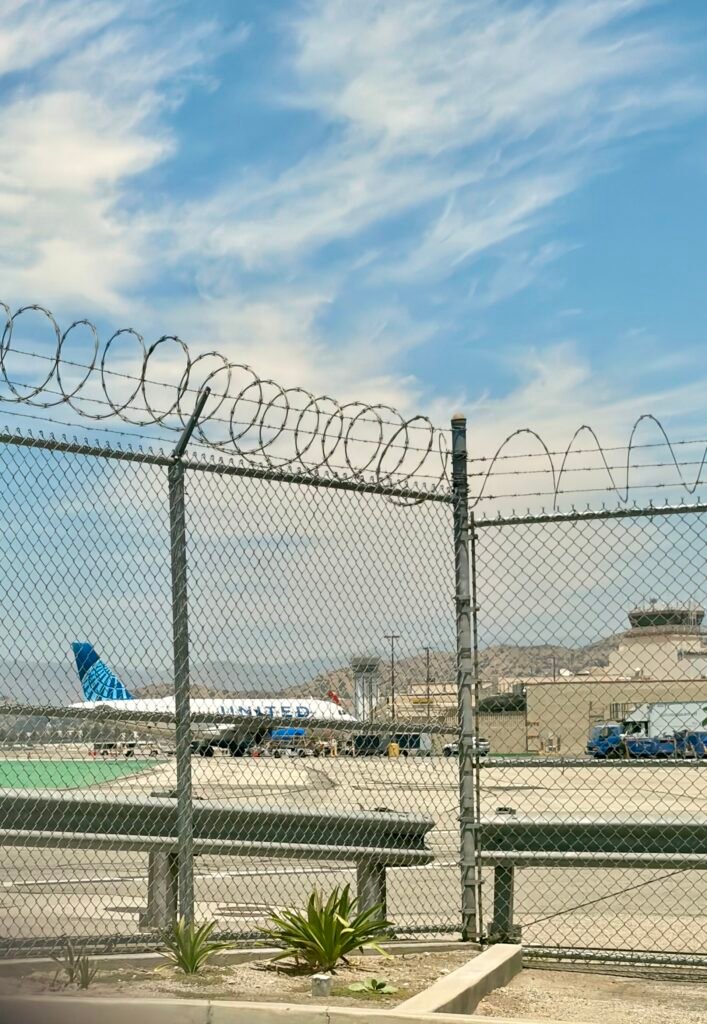
Getting from LAX without a car
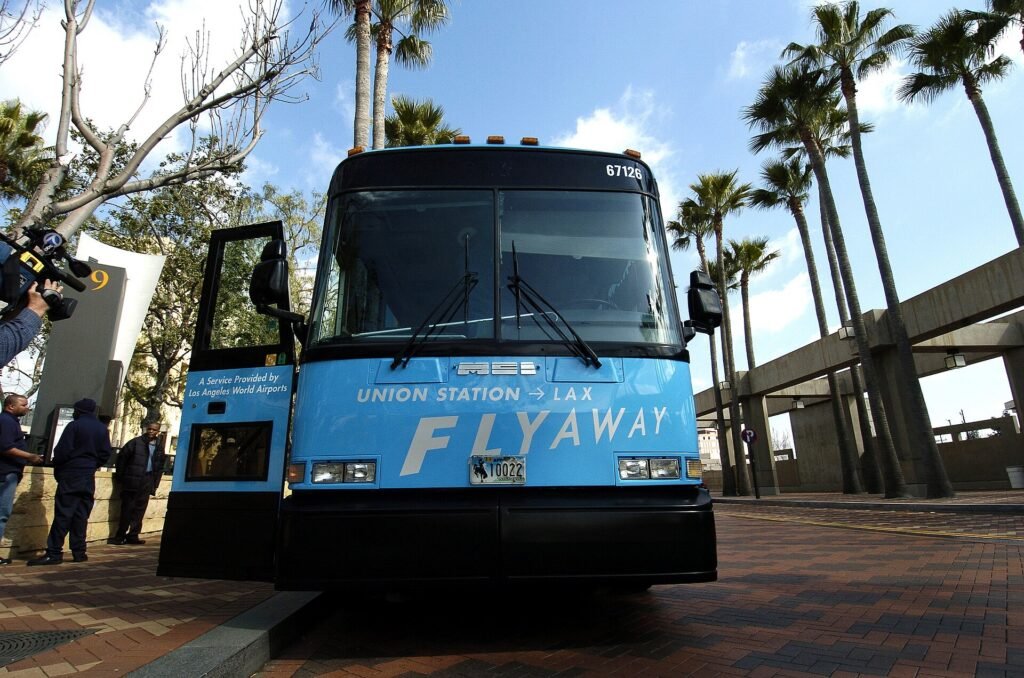
LAX has bus and shuttle connections to the Metro rail system and other options. Our three-day Los Angeles itinerary shows how to plan a short trip around transit and walking.
If you land late, hotels near LAX can be a better first night than a long transit ride.
A sample car-free trip
Day 1: Downtown
Walk to Grand Central Market, the Broad, Walt Disney Concert Hall, Little Tokyo and Olvera Street. Everything is within walking distance or a short train ride.
Day 2: Hollywood and Universal
Take the B Line to Hollywood/Highland for the Walk of Fame and TCL Chinese Theatre, then continue to Universal City for Universal Studios Hollywood.
Day 3: Museums on Wilshire
Take the D Line to Wilshire/Fairfax for LACMA, the Academy Museum and the Petersen Automotive Museum.
Day 4: Santa Monica and Venice
Take the E Line to Downtown Santa Monica. Walk the pier, rent a bike and ride the beach path to Venice.
Day 5: Pasadena or Long Beach
Take the A Line north to Pasadena or south to Long Beach.
Car-free tips
- Check service times before late-night plans.
- Use a trip planner app that shows live arrivals.
- Wear comfortable shoes. You will walk a lot.
- Stay alert on trains and at stations, especially at night.
- Carry water and sunscreen. Walking in LA can be sunny and hot.
- Plan one car day if you want Malibu, hikes or a day trip.
Accessibility
Metro rail stations have elevators, and buses have ramps or lifts. Elevators sometimes go out of service, so check Metro’s alerts before you travel. Reduced fares are available for seniors and riders with disabilities.
FAQ
Can you visit Los Angeles without a car?
Yes. Stay near a Metro rail line and group your sightseeing by area.
How much does LA Metro cost?
$1.75 per ride, with a $5 daily cap and an $18 seven-day cap when you use a TAP card or the same contactless card, according to Metro.
Can I tap my credit card on LA Metro?
Yes. Metro accepts contactless credit and debit cards, and the same card counts toward the fare caps.
Which areas are best for a car-free stay?
Downtown, Hollywood, Santa Monica, Koreatown, Pasadena and Long Beach.
Is the Metro safe for visitors?
Millions of people ride it. Use the same care you would in any big city, especially late at night.